









Overview
Pipeline transport in CCS processes
Supercritical and liquid CO₂ transfer through pipeline networks
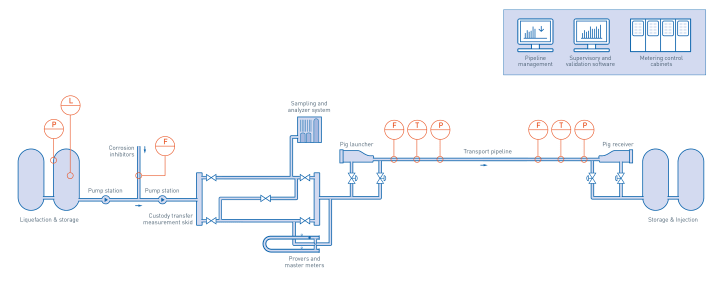
The transport of CO₂ via pipelines is a critical component in the management and utilisation of carbon dioxide. Pipelines typically convey CO₂ in a dense phase, either as a liquid or in a supercritical state. To maintain CO₂ in this dense phase, transport pressures generally range between 130 to 190 bar. For smaller pipelines, transporting gaseous CO₂ at lower pressures can be more economical, although the capacity is significantly reduced. These pipelines often include custody transfer skids, as CO₂ is traded as a valuable commodity. Additionally, corrosion inhibitors are injected into the pipeline to protect against degradation. Pipelines are designed to be piggable, allowing for inspection and cleaning services. Pump stations are strategically placed to maintain the necessary pressure and motive force. Given that CO₂ leaks pose a hazard, pipelines are typically equipped with leak detection systems to ensure safety.
KROHNE provides tailored measurement and monitoring solutions for CO₂ pipeline transport within Carbon Capture and Storage (CCS) applications. For the safe and efficient transport and commercial transfer of CO₂, accurate custody transfer measurement is essential. KROHNE offers certified flowmeters and fully integrated turnkey systems for precise measurement of gaseous, liquid, or supercritical CO₂.
In addition, early leak detection plays a critical role in minimising environmental risks and meeting regulatory requirements. KROHNE supplies advanced leak detection technologies that monitor the entire transport chain for potential CO₂ releases. This enables operators to detect anomalies at an early stage, take immediate action, and ensure full compliance with safety and environmental standards.