










Overview
Direct Air Capture in CCS processes
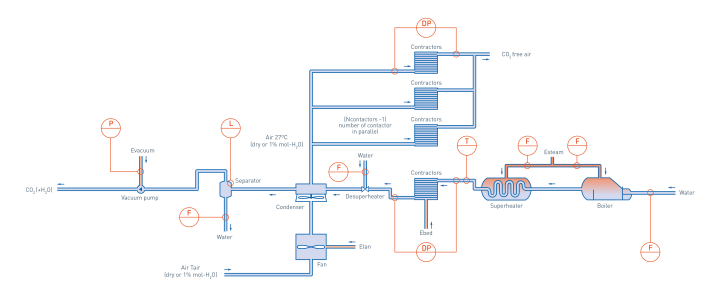
Chemical sorption and release cycle in DAC plants
Direct Air Capture (DAC) is a pioneering technology designed to remove carbon dioxide (CO₂) directly from the atmosphere. By targeting diffuse emissions already present in the air, DAC supports global efforts to achieve negative emissions and combat climate change.
The process begins with large fans drawing ambient air into the system, where it comes into contact with a chemical sorbent inside the contactor units. These sorbents – either liquid solutions such as potassium hydroxide or solid materials like amine-based filters – selectively bind with CO₂ molecules. Once saturated, the CO₂-rich sorbent undergoes regeneration: for liquid sorbents, this typically involves a series of chemical reactions; for solid sorbents, the CO₂ is released through the application of heat or vacuum pressure.
The liberated CO₂ is then purified to by removing any remaining contaminants, resulting in a stream of high-purity CO₂ gas. This gas is compressed and can either be stored underground in geological formations, used for enhanced oil recovery, or applied in industrial processes such as synthetic fuel production or beverage carbonation. The regenerated sorbent is then recycled back into the system, allowing for continuous CO₂ removal.
Reliable measurement and control are essential to the performance and efficiency of DAC systems. From monitoring air intake and regulating sorbent flow to controlling temperature and pressure during CO₂ release and purification – KROHNE’s instrumentation ensures stability throughout every stage of the process.