









Overview
Co2 injection in CCS processes
High-pressure injection of CO₂ into subsurface formations
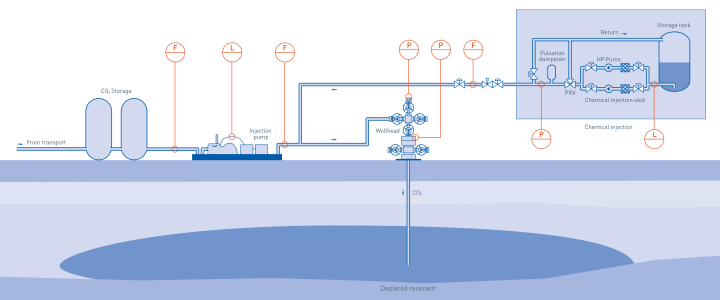
The CO₂ injection process involves transferring carbon dioxide into deep geological formations for long-term storage or enhanced oil recovery. Upon arrival at the injection site, the CO₂ – typically in a liquid or supercritical state – may undergo pre-treatment, including impurity filtration and pressure adjustment. To maintain the required conditions for injection, the CO₂ passes through a series of compression and cooling stages. Corrosion inhibitors may be added to protect infrastructure. The prepared CO₂ is then injected via high-pressure wells into subsurface rock formations. These wells are equipped with advanced control and monitoring systems to regulate flow and pressure, ensuring the structural integrity of the reservoir.
Throughout the injection phase, real-time monitoring tracks pressure, volume, and subsurface behaviour of the CO₂ to maximise storage efficiency and safety. The injected CO₂ is securely trapped within porous rock layers and is continuously monitored to ensure containment and prevent migration beyond the designated storage zone.
Reliable measurement is essential when injecting CO₂ into subsurface formations. KROHNE provides precise instrumentation to monitor key process variables such as flow rate, injection pressure, temperature, and well integrity in real time. Our high-performance flowmeters and pressure transmitters are designed to operate under extreme conditions, ensuring stable and accurate control throughout the injection process. From verifying injection volumes to supporting leak detection and reservoir monitoring, KROHNE’s solutions help operators maintain safety, comply with regulatory requirements, and optimise storage performance.